 PadelSage
A worn grip is one of the cheapest, most overlooked upgrades in padel — a fresh overgrip costs a couple of euros and takes under five minutes to fit, but only if you wrap it correctly. Wrap it the wrong way and you get a lumpy, slipping handle that catches your palm on every swing. The technique is simple once you know the five things that actually matter: where you start, the angle you wrap at, how much each turn overlaps the last, how much tension you hold, and how you finish it off.
Step 1: Remove the old grip and clean the handle
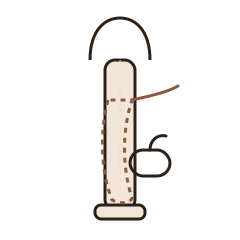
Unwind the old overgrip by peeling back the finishing tape and rolling it off in the opposite direction to how it was wrapped — it should come away in one continuous strip. Underneath, you'll usually find the racket's original factory grip, which you normally leave in place; an overgrip is a replacement layer on top of it, not a replacement for it. Once the old overgrip is off, wipe the handle down with a dry cloth to remove sweat residue and any leftover adhesive tack. A clean, dry handle is what lets the new grip's adhesive bond properly — wrapping straight over old residue is the single most common reason a new grip starts peeling within a week.
Step 2: Position the new grip at the butt cap
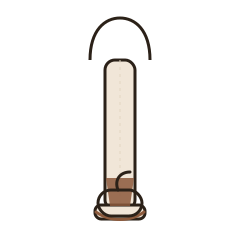
Find the small starting tab at the narrow end of the new overgrip — most padel overgrips taper slightly to a point here. Peel back just enough backing to expose a few centimetres of adhesive, and anchor that tab at the very bottom of the handle, flush against the butt cap (the flat end cap at the bottom of the racket). Some players angle the starting tab slightly so it wraps around the butt cap edge itself, which locks the bottom end in place and stops it from unraveling later. Getting this starting point right matters more than any other single step: start too high and you leave bare handle exposed at the bottom; start crooked and the whole wrap drifts off-angle from the first turn.
Step 3: Wrap at the correct angle with overlap toward the head
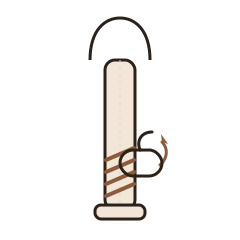
Holding the racket with the head pointing up and away from you, wrap the grip upward in a spiral, angling each turn so it travels diagonally rather than straight around the handle — roughly a 20-30 degree angle from horizontal works for most hands. Each new turn should overlap the previous one by about a third to a half of the tape's width, never wrapping edge-to-edge with no overlap and never doubling fully back over the same spot. The direction that matters most: wrap so that the leading edge of each turn — the edge your hand would catch on as it slides down toward the butt cap — lies flat under the tape rather than sticking up. In practice this means a right-handed player typically wraps moving the grip in a clockwise spiral when viewed from the butt cap looking up the handle (counterclockwise for a left-handed player), so the overlap seam faces away from the direction your palm slides during a swing. If you run a finger down the handle afterward and feel the tape edges catching against the direction of slide, you've wrapped it backward and should redo it.
Step 4: Maintain even tension all the way to the top
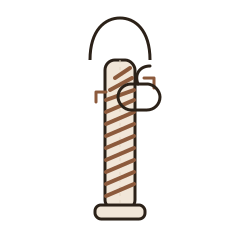
Pull the grip taut as you wrap — enough tension that the tape stretches very slightly and lies flat with no air bubbles or loose folds, but not so much that you stretch it thin or tear the material. Tension needs to stay consistent turn after turn; a common mistake is wrapping tightly near the bottom and easing off near the top as your hand fatigues, which leaves the upper handle feeling looser and more prone to slipping exactly where your top hand often rests on two-handed shots. Keep working your way up the handle in the same spiral and overlap pattern until you reach the top of the handle, just below where it meets the racket's throat or head.
Step 5: Secure the top with finishing tape
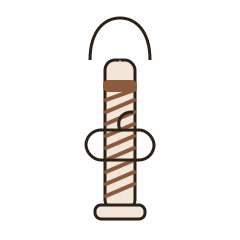
Cut the overgrip cleanly at the top of the handle, then secure the end with the thin strip of finishing tape that comes included with most overgrips — wrap it tightly around just that top edge, two or three turns, smoothing it down firmly so no edge is left loose enough to pick at. Press along the full length of the grip with your palm once more to bed the adhesive down and squeeze out any remaining air pockets, especially near the bottom anchor point and the top finish. A properly secured grip should show no lifting edges at either end after this final press, and it's ready to play with immediately — no curing or wait time needed.